How Technology, People, Process, and Product Work Together to Build Resilient Operations
The COVID-19 pandemic exposed deep vulnerabilities in manufacturing operations—supply chains broke down, workforce availability shifted overnight, and traditional operating assumptions no longer held.
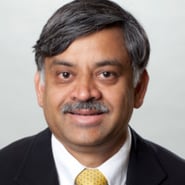
In this on-demand webinar, experts affiliated with Purdue University introduce a TP³ (Technology, People, Process, Product) framework to help manufacturing leaders respond to disruption while strengthening long-term competitiveness.
Rather than treating safety, efficiency, and Lean as trade-offs, this session shows how organizations can integrate them into a single, holistic operating strategy—one that supports resilience today and adaptability for whatever comes next.
View all previous KaiNexus Continuous Improvement Webinars
What You’ll Learn
-
How the TP³ framework provides a holistic lens for navigating disruption
-
Ways to manage infection risk without abandoning Lean principles
-
How manufacturers are rethinking products, capacity, and supply chains
-
Why communication, trust, and workforce engagement are central to recovery
-
How technology economics change during periods of instability
-
Practical examples of applying these ideas across manufacturing environments
Key Insights
Manufacturing competitiveness in a post-pandemic world is no longer driven by efficiency alone. One of the core insights from this webinar is that protecting people and remaining competitive are not opposing goals—they are deeply interconnected. When organizations design work with safety, clarity, and trust in mind, they often uncover new opportunities to improve flow, reliability, and performance.
The discussion also highlights how technology decisions must be reevaluated. Tools that once seemed too expensive or complex may now be viable when labor constraints, safety requirements, and variability are factored into total cost and risk. Leaders are encouraged to think less about automation as a replacement for people and more as an enabler of stability and resilience.
Finally, the webinar emphasizes that resilience is a system-level capability. Improvements in products, processes, or tools will fall short if they are not supported by strong communication, aligned decision-making, and an engaged workforce. The TP³ framework helps leaders see these connections clearly—and act on them deliberately.
Who This Webinar Is For
This webinar is ideal for:
-
Manufacturing and operations leaders
-
Lean, Continuous Improvement, and Operational Excellence professionals
-
Supply chain and production managers
-
Executives navigating post-pandemic recovery and future disruption
-
Improvement leaders seeking a holistic, systems-based approach
Whether you are stabilizing operations, planning for growth, or rethinking how your organization competes, this session offers practical guidance grounded in real-world experience.
 Roy Vasher
 Dr. Angus McLeod





.svg)