Webinar: Transforming Patient Safety at Our Lady of the Lake Regional Medical Center with KaiNexus
Why Accountability Needs a Better System
Many hospitals conduct patient safety rounds to identify risks and concerns—but too often, what happens after the rounds is inconsistent. Issues may be documented in different ways, tracked manually, or lack clear ownership and prioritization. Over time, this creates frustration, lost learning, and a sense that speaking up doesn’t always lead to action.
Accountability breaks down not because people don’t care—but because the system makes follow-through unreliable.
In this webinar, leaders from Our Lady of the Lake Regional Medical Center (OLOL) share how they addressed these challenges by standardizing how safety concerns are captured, prioritized, and resolved—while reinforcing a culture where safety is everyone’s responsibility.
From Safety Rounds to Reliable Follow-Up
Using KaiNexus to support patient safety rounds, OLOL created a transparent and consistent process for documenting concerns, aligning risks with the SAFER Matrix, and ensuring appropriate escalation and resolution.
Rather than relying on heroics or informal workarounds, leaders and frontline staff now share visibility into safety issues, progress, and outcomes—building trust that speaking up leads to meaningful action.
This session focuses on how accountability works in practice when it is grounded in systems, clarity, and learning—not blame.
View all previous KaiNexus Continuous Improvement Webinars
What You’ll Learn
-
Why patient safety rounds often fail to produce consistent follow-through
-
How OLOL standardized documentation and prioritization of safety concerns
-
How aligning issues to the SAFER Matrix improves risk-based decision-making
-
What effective accountability looks like when it’s focused on systems, not individuals
-
How transparency and visibility reinforce trust and psychological safety
-
How technology can support learning, escalation, and closed-loop improvement
Who This Webinar Is For
This webinar is especially valuable for:
-
Healthcare executives and senior leaders responsible for patient safety, quality, and risk
-
Quality, patient safety, and performance improvement leaders seeking better follow-through from safety rounds
-
Clinical and physician leaders involved in identifying and managing patient safety risks
-
Nursing leaders and frontline managers who facilitate or participate in safety rounds
-
Lean, continuous improvement, and operational excellence professionals supporting healthcare improvement efforts
-
Health systems and hospitals struggling with fragmented documentation, unclear ownership, or inconsistent escalation
Key Insight: Accountability Is a System Design Problem
Accountability improves when organizations:
-
Make it easy to raise concerns
-
Make prioritization explicit and consistent
-
Make ownership visible
-
Make follow-through reliable
As this webinar demonstrates, accountability isn’t about pressure or punishment—it’s about creating systems that support learning, action, and trust.
When leaders close the loop consistently, frontline staff learn that speaking up matters—and patient safety improves as a result.
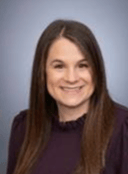
 Christopher Thomas, MD, is an Assistant Professor of Clinical Medicine at LSUHSC and Chief Quality Officer for Franciscan Missionaries of Our Lady Health System. He specializes in reducing clinical variability, accelerating evidence-based care, and implementing quality initiatives. His research focuses on sepsis diagnostics, hospital mobility, and unit-based safety scores. He has 40+ peer-reviewed publications.
 LeaAnn Teague, MBA, MT(ASCP), SBB, PMP, is Sr. Director of Performance Improvement. She excels in healthcare management, improving patient outcomes, and operational efficiency. Her initiatives have significantly enhanced patient safety, compliance, and revenue. LeaAnn is dedicated to healthcare excellence, innovation, and collaboration.





.svg)