How leaders can move beyond telling and persuading to help people find their own reasons to change (webinar)
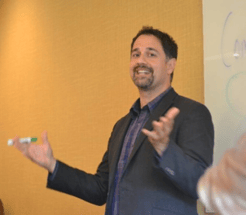
In this webinar, Mark Valenti introduces leaders to the principles of Motivational Interviewing (MI) and shows how this approach—originally developed in healthcare—applies directly to leading teams, improving engagement, and sustaining change in organizations.
Rather than trying to persuade, convince, or “sell” improvement to people, MI focuses on something more powerful: helping individuals surface their own intrinsic reasons for change.
Valenti explains that many improvement efforts fail not because people lack knowledge, but because leaders skip over two critical elements: importance and confidence. When people don’t feel heard, don’t feel they have a choice, or don’t see how change connects to what matters to them, they disengage.
This session offers a different path.
Why Telling People What to Do Rarely Works
The “righting reflex” that shuts people down
Leaders often respond to resistance by giving more data, more explanations, or more persuasion. Valenti calls this the righting reflex—our instinct to correct people instead of listening.
Whether it’s a patient struggling with medication adherence or an employee skeptical about Lean, the result is the same: people feel unheard and dig in further.
Motivational Interviewing replaces this reflex with listening, empathy, and curiosity.
The Three Conditions Required for Change
Knowledge, importance, and confidence
For someone to change behavior, three elements must be present:
- They understand what to do (knowledge)
- They believe it matters (importance)
- They feel capable of doing it (confidence)
Most organizations focus heavily on knowledge while neglecting the other two. MI helps leaders uncover which of these is missing by asking better questions and listening for what people actually say.
Intrinsic vs. Extrinsic Motivation at Work
Why rewards, praise, and mandates often backfire
Drawing on research from Daniel Pink and Gallup, Valenti explains how many workplace practices unintentionally trap people in extrinsic motivation—working for approval, rewards, or avoidance of punishment.
True engagement comes from intrinsic motivation: autonomy, mastery, and purpose.
Leaders influence this more than they realize through the words they choose, how they frame requests, and whether they allow people to feel they have a choice.
Listening as a Leadership Skill
Moving from fixing to understanding
A central theme of the webinar is that listening is easy to talk about and hard to practice.
Valenti shares examples of how leaders unintentionally invalidate people’s feelings by minimizing concerns, offering quick fixes, or reframing too quickly. MI encourages leaders to slow down, express empathy, and guide conversations toward what the other person sees as possible change.
Evoking Change Talk Instead of Fighting Resistance
Helping people talk themselves into change
People are more likely to act on ideas they verbalize themselves. MI focuses on drawing out “change talk” instead of arguing against “resistance.”
For example, when someone says, “Lean is just another flavor of the month,” the opportunity isn’t to defend Lean. It’s to explore what problems they see that need fixing and build from there.
Practical Frameworks Leaders Can Use Immediately
Valenti introduces several practical approaches leaders can begin using right away:
- Open-ended questions to explore importance and confidence
- The Elicit–Provide–Elicit method for sharing information without lecturing
- Recognizing when language like “compliance” or “resistance” creates barriers
- Framing conversations in ways that support autonomy and partnership
Why This Matters for Lean and Continuous Improvement
Motivational Interviewing aligns closely with Lean thinking. Both emphasize understanding the current condition, respecting people, and avoiding the urge to impose solutions without first understanding the problem.
For leaders struggling with disengagement, skepticism, or “resistance,” this webinar offers a mindset shift: the issue may not be that people don’t care, but that they haven’t been invited into the conversation in a way that connects to what matters to them.
This session provides a powerful reminder that sustainable change starts not with persuasion—but with listening.





.svg)