Why Sustainable Improvement Starts With Leaders Changing Themselves
Lean tools, daily management systems, and improvement software are powerful — but without the right leadership behaviors, their impact fades over time.
In this on-demand webinar, Kim Barnas, CEO of Catalysis, and John Toussaint, Chairman of Catalysis, explore what it truly takes to sustain continuous improvement in healthcare.
Hosted by Mark Graban as part of the KaiNexus Continuous Improvement Webinar Series, this session focuses on the often-overlooked foundation of improvement success: personal leadership transformation.
Rather than emphasizing tools alone, this webinar examines how leaders must change their own behaviors — how they listen, learn, reflect, and coach — to create organizations filled with capable problem solvers.
View all previous KaiNexus Continuous Improvement Webinars
Why Leadership Behavior Matters
Many healthcare organizations make early progress with Lean through projects, value stream mapping, and improvement events. But without consistent leadership behavior change, those gains are difficult to sustain.
Kim Barnes and John Toussaint share lessons drawn from decades of experience working with healthcare leaders around the world. Their work reveals a common pattern: organizations do not truly change until leaders change first.
This webinar introduces a practical framework for leadership self-reflection and growth, grounded in real-world coaching experience and supported by the Personal A3 and leader standard work.
What You’ll Learn
In this session, you’ll learn:
-
Why continuous improvement efforts stall without leadership behavior change
-
The five leadership traits essential for sustaining Lean and continuous improvement
-
How the Personal A3 helps leaders reflect, learn, and hold themselves accountable
-
Why “doing the work yourself” limits organizational learning and engagement
-
How leader standard work reinforces humility, curiosity, and discipline
-
Practical ways leaders can shift from problem-solving to coaching
Key Insights
Sustainable improvement is not about leaders having all the answers. It’s about leaders creating the conditions where others can think, learn, and improve.
One of the most powerful ideas explored in this webinar is the distinction between knowing Lean and practicing Lean. Many leaders understand Lean concepts intellectually, yet struggle to consistently demonstrate the behaviors that support learning and problem-solving at every level of the organization.
Kim and John explain why self-reflection, humility, and curiosity are not “soft skills,” but operational necessities. Through examples from healthcare systems around the world, they show how leaders who embrace personal accountability — often through tools like the Personal A3 — are better equipped to build resilient, high-performing cultures.
The webinar also challenges the assumption that improvement can be delegated. While improvement teams and facilitators play important roles, lasting change requires leaders to model the behaviors they expect from others.
Who This Webinar Is For
This webinar is especially valuable for:
-
Healthcare executives and senior leaders
-
Quality, safety, and performance improvement leaders
-
Lean, Kaizen, and operational excellence practitioners
-
Managers responsible for culture change and engagement
-
Organizations struggling to sustain improvement over time
Whether you are early in your Lean journey or seeking to strengthen long-term results, this session offers practical guidance you can apply immediately.

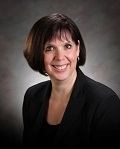 Prior to her role at Catalysis, Kim served as a senior vice president for ThedaCare, and president of Appleton Medical Center and Theda Clark Medical Center. While in that role she enjoyed the opportunity to learn about LEAN and implement this work in hospital operations. The ThedaCare Improvement System (LEAN) path started in 2003, with value stream mapping followed by improvement events, and projects. She was involved in leading two of the initial value streams for OB and cancer services. In 2014, Kim authored a book titled Beyond Heroes, A Lean Management System for Healthcare, based on this journey. Kim has a Master of Science degree in Health Care Administration.





.svg)